
PATH 01
New to EMDR?
Understand what therapy means, then prepare for a first conversation.
Browse original coloring scenes, everyday activities, short narrated explanations, and practical caregiver guidance. Explore together, with no pressure to finish.
Every activity is optional. Explore together, or take a break.

Explore one small activity with your child, or browse a guide first. Nothing must be completed in a particular order.
Each path connects a video, a conversation, a hands-on activity and a guide for the adult. Choose what fits; there is no prescribed order.
Understand what therapy means, then prepare for a first conversation.
Learn everyday feeling words and explore a little together.
Practice a pause signal and choose a safe way to ask for support.
Support an ordinary school day, bedtime, or a change of plans.
Choose an activity that feels right today. You can change your mind anytime.
Get to know your feeling weather, color your ideas, and find helpful words.
Let's playExplore useful everyday guidance, choose activities, and know when to pause.
Parent cornerReal US Letter worksheets, coloring pages, cards, and a complete printable pack.
Browse printablesThese activities are about everyday emotions and connection — not about doing trauma therapy at home.
Choose a topic and a format. Suggestions are based only on those choices—not on personal or medical information. Nothing is sent or saved.
These are educational suggestions, not a screening tool, diagnosis, or personalized medical recommendation.
Research-conscious information about professional therapy and age-appropriate everyday support—without exaggerated claims.
EMDR stands for Eye Movement Desensitization and Reprocessing. It is a structured psychotherapy. A qualified clinician evaluates whether it is appropriate and adapts treatment to the child. Our site provides education, communication choices and low-pressure creative resources.
We intentionally do not teach trauma-memory processing, self-administered bilateral stimulation, or diagnostic screening.
Get the 3-page parent guide ↓Open each answer for practical guidance. Ask the treating clinician about decisions specific to your child.
For further reading: EMDR International Association — About EMDR Therapy and Newcastle Hospitals NHS — EMDR for children and young people. General editorial review: November 2026. No independent pediatric clinician has yet approved these resources.
Simple choices, not scores. No accounts, uploads, tracking or stored personal responses. These are everyday communication activities, not therapeutic exercises.
Pick an everyday situation. The page offers a child-friendly sentence and an adult response.
Choose a short request, then print your card. Nothing is saved or sent away.
Pick practical questions to bring to an appointment. Do not write about difficult memories here.
With a grown-up, notice a comfortable everyday thing around you. Skip anything you do not like.
Four meaningful, screen-friendly games about everyday feelings, listening, and communication. No scoreboards, no accounts, and no personal information saved.
Imagine a character who is excited and a little nervous about a new class. What weather might fit?
Pick a pretend everyday situation, then explore a helpful child phrase and a kind grown-up reply.
Matching activity ↓Choose up to three ordinary ways to connect. Your menu stays on this page and is not sent anywhere.
Print a blank menu ↓Read a small everyday story. There can be several helpful endings, and nobody earns points.
What could a grown-up say?
Every kit has a real printable activity plus a second page that tells the grown-up why it matters, how to introduce it, what to say, and when to stop. These are optional, everyday learning materials.
Short, useful answers without health promises or pressure to disclose personal history.
No. EMDR is a structured psychotherapy delivered by a qualified clinician. The activities here are non-clinical learning and communication resources. Do not ask a child to revisit traumatic memories or practice treatment methods on their own.
That is a valid choice. You can offer another format, simply talk, or do nothing. The goal is connection, not completion. Avoid rewards or pressure for sharing private feelings.
Use simple, practical language: you will meet someone whose job is to listen and help. Explain what you know about the location and appointment. Ask the clinician about caregiver attendance, breaks and confidentiality instead of promising specifics.
No. Do not use the website to prompt traumatic disclosures or investigate details. If your child brings up something concerning, listen calmly, thank them for telling you, and contact an appropriate professional for guidance.
Yes, the standalone activities are intended to be useful with a trusted adult. The companion is designed to sit alongside the workbook, not to make the book dependent on the website.
The interactive games on this site are designed to run locally in your browser without accounts, email forms or a server receiving children's answers. Avoid entering identifying or sensitive details into shared devices.
Ask about the clinician's license, child-specific training, experience with the child's age group, treatment suitability and how they involve caregivers. You can find background information and directories through EMDRIA.
Seek qualified support for persistent distress, functional problems or concerning changes. If there is immediate danger, contact local emergency services. In the U.S., call 911 for emergencies or call/text 988 for crisis support.
Independent references: EMDRIA · NCTSN family resources · Find an EMDR therapist
Three interactive activities for kids to explore with a trusted grown-up. Nothing you choose here is sent to a server.
Choose one or more. Feelings can be mixed, and every kind of weather belongs here.
Your weather can be anything today. You can also choose not to answer.
Tap a phrase. Read it together, copy it, or choose something else.
Choose a color, then tap the petals, leaves, and sunshine. There is no right way.
Explore our growing collection of printable activities and parent guides. Each listed resource has a real PDF download, formatted for US Letter printing.
Choose individual US Letter resources here, or get the original 18-page activity pack as a convenient bundle.
Ten original illustrated scenes to color at your own pace. Explore feeling weather, everyday comforts, little routines and imaginative adventures. They are creative activities—not EMDR therapy exercises.
13-page printable PDF · 10 original illustrated scenes + cover + grown-up notes · US Letter · single-sided friendly · no registration
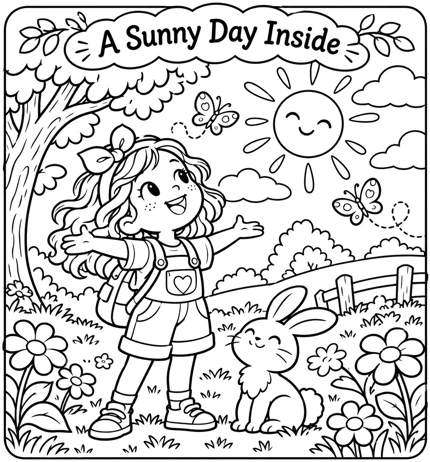
Each page can be printed separately. Select Color online to open the interactive studio below.
Pick a color and draw directly on the picture. Undo, erase, reset, save or print. Drawings stay on your device.
Eight new two-page kits: one page of grown-up instructions and one child activity page. They sit alongside the original 18 printable sheets.
Prepare practical questions and comfort choices without revisiting difficult memories.
Make a small everyday plan for transitions around school.
Make a flexible menu of familiar wind-down choices.
Design a word or gesture to tell an adult you need a pause or company.
Practice choosing between talking, drawing, pointing and writing.
Help children identify a familiar next step when everyday plans change.
Notice skills and interests without turning feelings into a performance.
Build a child-led question list to bring to a qualified professional.
All eight guided kits are also collected into one 16-page PDF.
Short educational stories in American English. Watch together, read the transcript, and explore a matching activity when you feel ready.
A gentle explanation of what a trained therapist does—and what children get to choose.
Grown-up note: clarify that EMDR is provided by qualified clinicians, and answer practical questions without promising an outcome.
Welcome. EMDR is a kind of therapy. The letters stand for Eye Movement Desensitization and Reprocessing. That is a big name! A trained therapist can explain what those words mean in a way that makes sense to you.
A helper you meet. Your therapist listens and helps you feel more comfortable. You might talk, draw, play, or use other activities that fit your age. Your therapist decides how to guide the treatment safely.
Your choices matter. If you do not understand something, you can say so. You can ask for a break. You can tell your therapist when something feels too hard. Your feelings and choices matter.
Not a home challenge. Looking at lights, tapping, or thinking about difficult memories are not activities you need to copy from a video. An EMDR therapist guides treatment and works with your caregivers when appropriate.
A question to bring. Before you go, think of one small question. You might ask where you will sit, whether you can bring a comfort item, or what happens if you need a break. You can share it with a trusted grown-up.
Your next step. There is no test to pass. You can use our First Visit Picture Plan with a grown-up, or skip it. Being curious is enough for today.
Learn to name mixed emotions without asking a child to explain painful events.
Grown-up note: accept every emotion word, drawing or decision to skip. No need to analyze why a feeling appeared.
Hello, weather watcher. Some mornings feel sunny. Some afternoons feel cloudy. Sometimes lots of feelings come together. The weather outside changes, and feelings can change too.
Different weather. You might feel excited about seeing a friend and nervous about a new classroom. It is possible to have two feelings at the same time. There is no single correct answer.
Notice without judging. You do not have to make a feeling go away. You can give it a name, or use a color or picture instead of words. You can also decide not to share.
Choose a little action. Would drawing your feeling weather be fun? Or would you rather tell a grown-up what you need? If you are not in the mood, you can try another day.
Try it together. With a trusted grown-up, pick one weather picture for today. Sunny, cloudy, rainy, or a mix. There is no right or wrong sky. You can change your mind later.
A simple illustrated lesson on stop signals, consent, and choosing the next step.
Grown-up note: agree on a pause signal and respond when it is used. Do not pressure the child to complete an activity.
A useful superpower. Sometimes a game, worksheet, or conversation feels like too much. You can use a word, a gesture, or a card to show you would like a break.
What to say. You could say: I would like some quiet. Can we stop for now? Can you stay with me? You do not need to find perfect words. A safe grown-up can help you figure out what you need.
What adults can do. When a child asks to stop, grown-ups can listen, slow down, and offer choices. It is not a race to finish an activity. A pause can be the best next step.
Choose the next step. After a break, you can decide what comes next with your grown-up. Maybe you return to the page, maybe you do something different. Both are okay.
Make your own signal. Design a little pause signal together. Practice it when things are calm. Your signal is a way to communicate, not a challenge or a score.
A simple, optional attention-to-the-room activity with alternatives for sensory needs.
Grown-up note: keep sensory noticing optional; skip sounds or touch if uncomfortable and never require closed eyes.
Here with you. If you would like, spend a moment looking at the room where you are sitting with a trusted grown-up. You do not need to close your eyes. You can stop at any time.
Colors and shapes. Perhaps you can spot a blue book, a round cushion, or a plant. You can name it aloud, point, or just notice it. Your grown-up can look with you.
Sounds and textures. Maybe you can hear a quiet sound, see a funny pattern, or feel your feet on the floor. Skip sounds or touch if those do not feel good for you.
There is no test. You do not have to find five things to finish. You can choose one, two, or none. This is just a playful way to pay attention to what is around you.
Make it your own. Want to continue? Draw one everyday object you noticed. If not, tell your grown-up you are done. Either choice counts as taking care of yourself.
Practice short help-seeking phrases and identifying a trusted adult.
Grown-up note: offer communication choices. If your child discloses danger, follow appropriate professional/safeguarding steps.
You do not have to do it alone. If you are having a tough day, there are grown-ups who can listen. They might be a caregiver, teacher, counselor, relative, or another safe person in your world.
Small words work. You can say: I am not sure what I need. Can you listen? Can you sit with me? Can we talk later? Even pointing to a picture can help a grown-up understand.
More than one way to share. Some people love talking. Others would rather draw or write first. You can choose a way that works for you today. A trusted grown-up can offer choices.
If the first person cannot help. Sometimes the first grown-up you ask is busy, distracted, or unsure. It is okay to ask another safe adult. You deserve to be taken seriously.
Practice together. With a trusted grown-up, pick one short sentence that feels natural to you. You can practice it like a pretend conversation, or write it on a card.
What parents and children can prepare before an appointment—without rehearsing traumatic memories.
Grown-up note: ask the therapist about practical arrangements. Do not encourage a child to rehearse difficult memories.
Before your visit. Visiting a new office or meeting a therapist can feel strange. You might have questions, and that is okay. You do not need to prepare a story about anything difficult.
The practical stuff. A grown-up can help you find out where to go, how long a visit may last, whether you can bring a comfort item, and what to do if you want a pause.
Your voice matters. Therapists who work with children explain activities in ways children can understand. You can say when something does not make sense. You may also ask your caregiver to help share a question.
After your visit. You do not have to report every detail to anyone. If you have concerns after a session, your grown-up can contact the therapist and ask for guidance.
One small plan. Choose a practical question to bring along, such as: Can I take a break? May I draw instead of talk? What do I do if I feel unsure? Your therapist can help you find the answers.
Eight substantial topics, written for caregivers rather than clinicians. Read the guidance here or download an individual printable field guide.
A clear distinction between clinician-led EMDR and everyday educational activities.
EMDR stands for Eye Movement Desensitization and Reprocessing. It is a structured psychotherapy conducted by a trained mental-health professional. With children, an appropriately trained clinician adapts communication, preparation and therapeutic work to developmental needs and the individual child. The exact treatment plan is not something a website or workbook can prescribe.
A child may experience conversation, drawing, play-based communication and skills for feeling oriented and supported. Depending on the stage of treatment, the therapist may use specific EMDR procedures. Families should ask the therapist which activities are part of therapy, what consent and choice look like, and what to do between sessions.
This hub teaches everyday emotion words, supportive conversation, practical preparation and asking for help. It deliberately does not guide eye movements, self-tapping protocols, trauma-memory retrieval or memory reprocessing. That distinction should remain visible across every resource.
Ask: What qualifications do you have for EMDR with children? What should we expect at the first visit? How do you support a child who wants to pause? What should we do if difficulties increase between appointments? What role should caregivers play?
“You do not need to practice therapy at home. This page just helps us find words and questions.”
Boundary: A workbook can support communication; it cannot establish whether EMDR is appropriate for an individual child.
Reference context: EMDRIA child resources and NHS child EMDR information.
A practical caregiver checklist that does not put pressure on a child to disclose.
Confirm time, location, accessibility, cost, caregiver participation and how the therapist works with children. Ask what your child can bring and whether breaks are available. Share relevant information privately with the clinician rather than asking the child to prepare a detailed narrative.
Use truthful, ordinary language: “We are meeting someone whose job is to help children with tough feelings and experiences. You can ask questions.” Do not guarantee that the visit will feel easy or that treatment will work quickly. Leave room for uncertainty.
Let the child choose a comfortable item, a question to ask or a way to communicate. Avoid promises you cannot control, such as guaranteeing a particular activity. Remind the child they can tell the therapist if they are confused or uncomfortable.
Offer rest and ordinary routine. Do not quiz your child about every detail. Follow the clinician’s instructions about feedback, safety and support between sessions. Contact the clinician if distress, behavior changes or questions arise.
“Would you rather bring your small notebook or your soft toy?”
Boundary: Use the matching child page: My First Therapy Visit Picture Plan.
Reference context: EMDRIA child brochure and Newcastle Hospitals NHS guidance.
A practical way to respond when you do not know what to say.
Children differ in how they communicate. Some talk immediately; others draw, move, ask to be alone or need time. Do not interpret a child’s silence as refusal or evidence that nothing is wrong. Offer an invitation, not an interrogation.
Short, specific responses can help: “I hear you want me nearby” or “You want some quiet right now.” Avoid automatic reassurance such as “Nothing bad can happen” or “You have no reason to worry.” Those statements may contradict the child’s experience.
Try one choice at a time: “Would talking or drawing feel easier?” “Would you like me to listen or help you solve something?” Avoid so many options that choosing becomes another burden.
Do not collect sensitive trauma stories in an online form or ask children to upload drawings about traumatic experiences. Keep worksheets in a private place if they include feelings or personal details, and share with professionals only in appropriate ways.
“I am here. You can talk, draw, or say nothing for now.”
Boundary: If a child reveals abuse or an immediate safety concern, follow safeguarding and emergency procedures rather than relying on worksheet routines.
Reference context: EMDRIA Children’s Toolkit and child mental health practice guidance.
What it looks like to make activities genuinely optional.
A child can find a page too personal, confusing, boring or emotionally uncomfortable. An educational task should never be framed as something they must complete to get better. A pause or refusal is useful communication, not a failure.
State the purpose simply and offer a small choice. Ask permission before starting. Keep ordinary sensory preferences in mind—some children dislike noise, touch, closed eyes or scripted breathing. Do not insist on any of those.
Watch for signs that the child wants to stop. If they say no, move away, appear overwhelmed or go quiet in a way that concerns you, stop and offer ordinary supportive care. Do not push toward disclosure.
Do not require a score or a big emotional improvement. Ask whether the activity was helpful, neutral or not for today—if the child wants to answer. Return to familiar routines. Speak with the child’s clinician if the activity raises concerns.
“We can stop now. We do not need to finish the page.”
Boundary: Consider creating a personal help signal during a calm moment, not during a crisis.
Reference context: EMDRIA Children’s Toolkit guidance on adult support and stopping.
Grounded ways to support routines without turning a workbook into treatment.
After school, children may need a little time before conversation. Consider a predictable choice—snack, quiet time or a familiar activity. If a child has sustained distress at school, collaborate with the school and seek professional guidance as appropriate.
A familiar bedtime routine may include a story, low light, a comfort item or agreed quiet time. Offer choices you can actually maintain. This site does not claim that a worksheet treats nightmares, insomnia or trauma-related sleep disturbance.
Describe the change plainly, explain what is known and offer one small next step. Visual plans can help some children understand sequencing. Avoid promising that unexpected changes will never happen.
If sleep, attendance, eating, social connection or everyday functioning change substantially or stay disrupted, consult the child’s pediatrician or a qualified mental-health professional for individualized assessment.
“Our plan changed. First we will go home, then you can choose a snack or quiet time.”
Boundary: Use the new School-Day Comfort Choices and Bedtime Comfort Menu pages as conversation tools.
Reference context: General family guidance; no therapeutic efficacy claim is made for the activities.
Recognize signs that an educational website is not enough.
Sustained difficulties with sleep, eating, school attendance, play, relationships or daily functioning deserve attention. Frequent intense worry, sadness, regression or withdrawal may also warrant consultation. An isolated checklist item is not a diagnosis.
If a child has experienced or witnessed a potentially traumatic event, or you have concerns about ongoing safety, seek guidance from an appropriately qualified pediatric or mental-health professional. Do not use this site to assess trauma severity or select a therapy protocol.
When a child may be in immediate danger, use local emergency services. In the United States call 911 for emergencies; for crisis support call or text 988. Seek urgent professional assistance for self-harm, suicidal statements or dangerous behavior.
A pediatrician, school professional or mental-health provider may help with referrals. If exploring EMDR, look for a licensed clinician with specific training and experience treating children. Ask about caregiver involvement and safeguarding.
“I am concerned about how hard this has been. I would like us to talk with someone trained to help.”
Boundary: The information here is educational and cannot tell whether a particular child needs EMDR.
Reference context: EMDRIA Children’s Toolkit and EMDRIA Find a Therapist.
The goal is meaningful choice, not a single required way to participate.
Words are not the only valid format. A child can point, draw, choose a picture or communicate using familiar supports. Do not insist on eye contact, speech or a particular amount of detail to “complete” an activity.
Bright screens, audio, touch and movement can feel different to different children. Offer quieter formats, printable alternatives and reduced sensory input. The website’s videos include captions and transcripts so families can choose how to access them.
Read instructions aloud if helpful. Offer bigger spaces, thicker pens or the possibility of answering verbally. You can do only one step. A child may also prefer that an adult writes down their exact words.
Use caregiver and family language that fits the child’s real context. Do not assume one family structure. If translating a page, retain the activity’s optional nature and avoid introducing clinical claims.
“Would you rather point to a picture or tell me in your own words?”
Boundary: Accommodations are not the same as therapeutic intervention.
Reference context: Practical accessibility design guidance; adapt to the individual child.
Use these questions to understand training, safety and what to expect.
Are you licensed in our jurisdiction? What training and supervision have you completed for EMDR with children? What experience do you have with children at a similar developmental stage? How do you decide whether EMDR is appropriate?
How do you explain EMDR to children? What happens at an initial appointment? How do you accommodate communication, neurodevelopmental or sensory needs? What choices does the child have during sessions?
How will caregivers be involved? What does confidentiality mean for the child and the caregiver? How do you handle a request to stop? Who should we contact if concerns arise between sessions?
How do you review goals and progress? What signs mean the treatment plan needs to change? What should we avoid doing at home? How will we know when to consider a different or additional type of support?
“Could you explain how you work with children and what I should do between visits?”
Boundary: There is no single correct answer to every question; look for clear, individualized explanations and appropriate qualifications.
Reference context: EMDRIA and local licensing/clinical guidance.

This companion is about everyday connection. You don't need to teach a therapy technique. You can offer choices, make room for feelings, and notice when extra help is needed.
Find practical answers about preparing for a visit and using the hub together.
Eye Movement Desensitization and Reprocessing. A trained clinician can explain the name in words your child understands.
The hub is an educational companion to the workbook. Ask your child’s clinician how it fits with any care plan.
A qualified clinician assesses the child’s needs and discusses options with the family.
Children’s needs vary. A clinician can discuss whether assessment or any treatment is appropriate.
Start with WHO’s guidance on pediatric PTSD and NICE NG116. NICE specifies additional conditions for considering EMDR for young people.
Ask the office. An initial visit may focus on questions, getting to know the family, and understanding what support is needed.
Yes. Try: “What options are available, and what would make one a better fit for my child?”
Ask about professional licensure, training in EMDR, and experience with children at a similar developmental stage.
Ask the office beforehand. Share the answer with your child so they know what to expect.
Ask how the clinician involves caregivers and how that may change between appointments.
Offer to write it down, read it for them with permission, or let them point to a choice.
Take the request seriously. Ask the clinician how a pause signal will be recognized during appointments.
Yes. Start with one activity that interests them. They can skip it or stop midway.
The activities work with fictional examples and everyday choices. A child may pass on any prompt.
Try: “Would you like to tell me about any part of it?” Accept a pass. Let your child choose what the picture means to them.
Read the prompt aloud, offer two choices, or show how to point to an answer.
Use the everyday communication pages when appropriate. Discuss what to share with your child and check with school staff.
Leave room for more than one answer. For fictional examples, you can ask what each possible feeling might fit.
Yes. Open a scene, choose a brush color, and draw. You can also open a scene’s printable PDF.
The Coloring Studio exports a PNG to your device. Check your browser’s downloads to locate it.
Use the captions or read the transcript alongside the video.
Pick one useful step and return later if you want.
Stop the activity. Offer ordinary support and ask a qualified professional for guidance if concerns persist.
Ask the child first when appropriate. Keep completed pages private and explain any limits related to safety.
You can use it for optional education and creative activities. Ask the clinician what they recommend for any therapy practice between appointments.
This website offers educational, child-friendly activities to explore feelings and communication. It is not an EMDR treatment program, a self-directed trauma protocol, or a substitute for individual assessment by a qualified clinician. It does not teach children to process traumatic memories or use therapeutic bilateral stimulation at home.
Children can skip or stop any activity. If your child is distressed or concerned about safety, pause the activity and consult a qualified professional. In immediate danger in the U.S., call 911; for crisis support, call or text 988.